
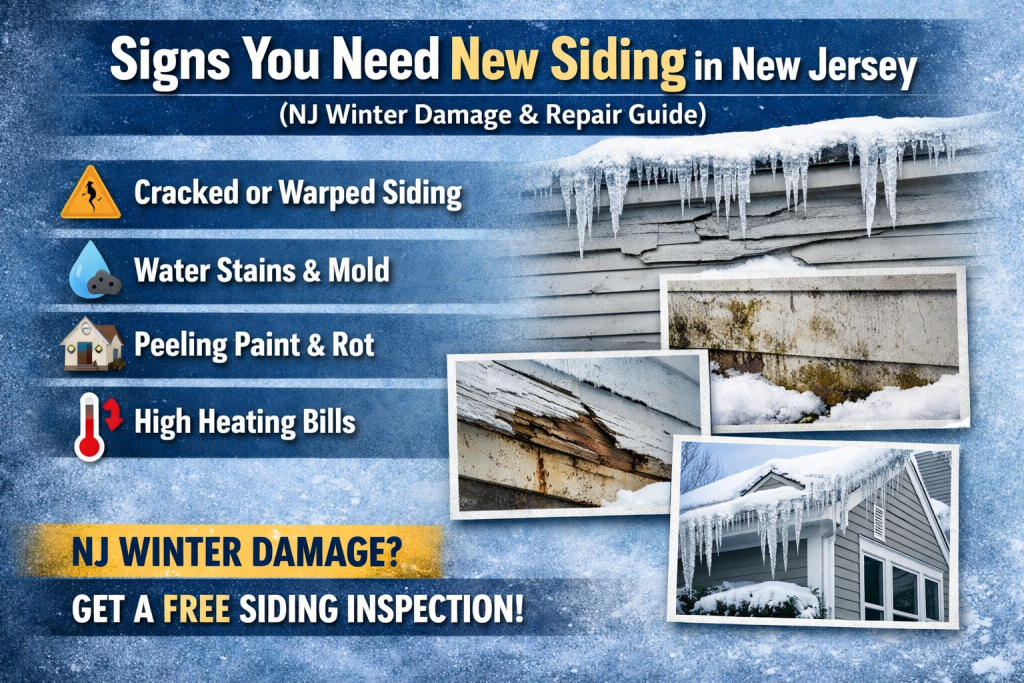
If you’re a homeowner in New Jersey — especially in Bergen County, Passaic County, or Essex County — you may be wondering:
- Do I need siding repair or full siding replacement?
- Do I need new siding NJ?
- Cost to repair rot behind siding NJ?
- Can winter cause rot behind siding?
- Post winter siding inspection NJ?
- Is there water behind my siding?
- Should I schedule a siding inspection in NJ?
New Jersey’s climate — heavy snow, Nor’easters, coastal moisture, and aggressive freeze-thaw cycles — makes siding damage more common than many homeowners realize. What looks fine on the surface can hide serious structural issues underneath.
This guide explains how to tell if you need vinyl siding repair, full siding replacement, or a professional siding inspection in New Jersey.
Siding Repair vs Replacement in New Jersey – How to Tell the Difference
One of the most common searches we see is: “siding repair vs replacement in NJ?”
When Vinyl Siding Repair Is Enough
In many Bergen, Passaic, and Essex County homes, repair may be sufficient if you notice:
- One or two cracked panels
- Minor loose siding panels
- A few blown siding panels after a storm
- Small localized water entry
Localized siding damage after winter NJ can often be repaired without replacing the entire exterior.
When Full Siding Replacement Is Required
Full siding replacement in New Jersey is typically necessary if there is:
- Widespread hidden rot behind siding NJ
- Persistent water behind siding
- Sheathing rot behind siding
- Recurring winter siding damage
- Structural soft spots behind siding
When moisture has reached the wall sheathing, simple repair is no longer enough.
How Long Does Vinyl Siding Last in New Jersey?
Many homeowners ask, “How long does vinyl siding last?”
In NJ’s climate, vinyl siding typically lasts 20–30 years. However, freeze-thaw damage, UV exposure, and improper flashing can shorten its lifespan significantly — especially in Northern NJ communities.
Winter Siding Damage in NJ – Freeze-Thaw & Ice Dam Risks
How Freeze-Thaw Damage Siding in New Jersey
New Jersey’s temperature swings cause snow to melt during the day and refreeze at night. This freeze-thaw damage siding cycle:
- Allows water to enter siding seams
- Expands when frozen
- Loosens fasteners
- Pushes moisture deeper into the wall
Over time, this leads to rot behind siding and siding moisture problems.
Ice Dam Siding Damage & Improper Flashing
Ice dam siding damage is extremely common in Bergen County and Passaic County homes.
When ice dams form at the roofline, water backs up behind shingles and siding. Combined with improper flashing siding, this can cause:
- Water behind siding
- Mold behind vinyl siding
- Sheathing damage behind siding
- Interior drywall staining
Rot Behind Siding & Structural Damage in NJ Homes
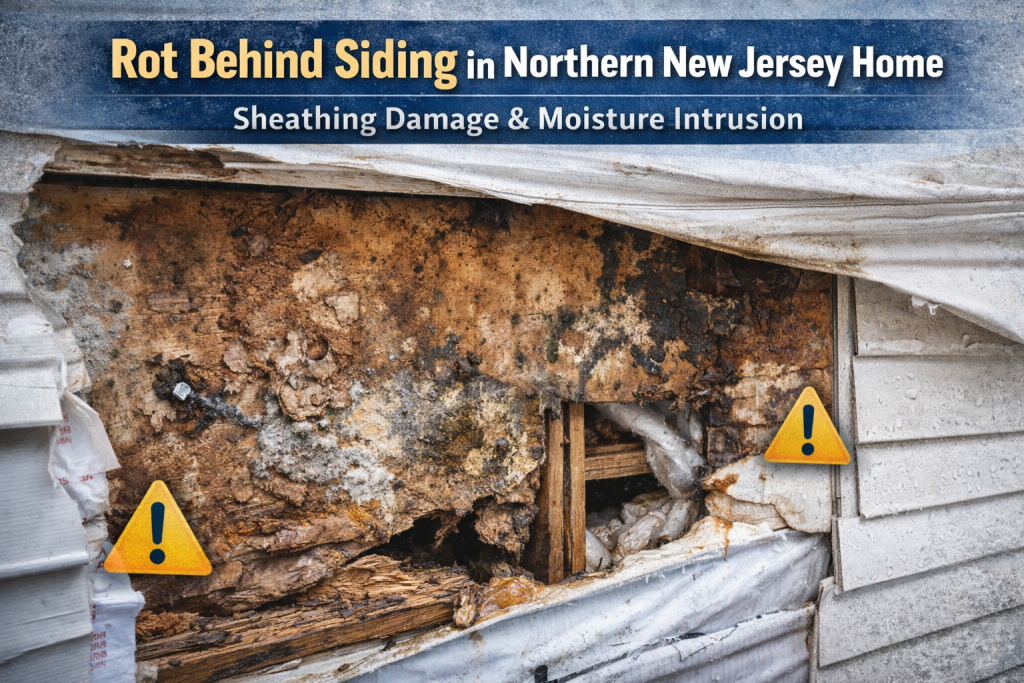
Even if your siding looks fine, hidden damage may exist.
Sheathing Rot Behind Siding
Sheathing rot behind siding occurs when plywood or OSB remains damp for extended periods. This weakens structural integrity and often requires full replacement.
Mold Behind Vinyl Siding
Mold behind vinyl siding is common in older New Jersey homes where vapor barriers were improperly installed.
Dry Rot Behind Siding
Dry rot behind siding spreads through damp wood and can compromise wall framing.
Soft Spots Behind Siding
If you feel soft spots behind siding, this is often early-stage sheathing damage behind siding.
Most Common Siding Failures in Bergen, Passaic & Essex County
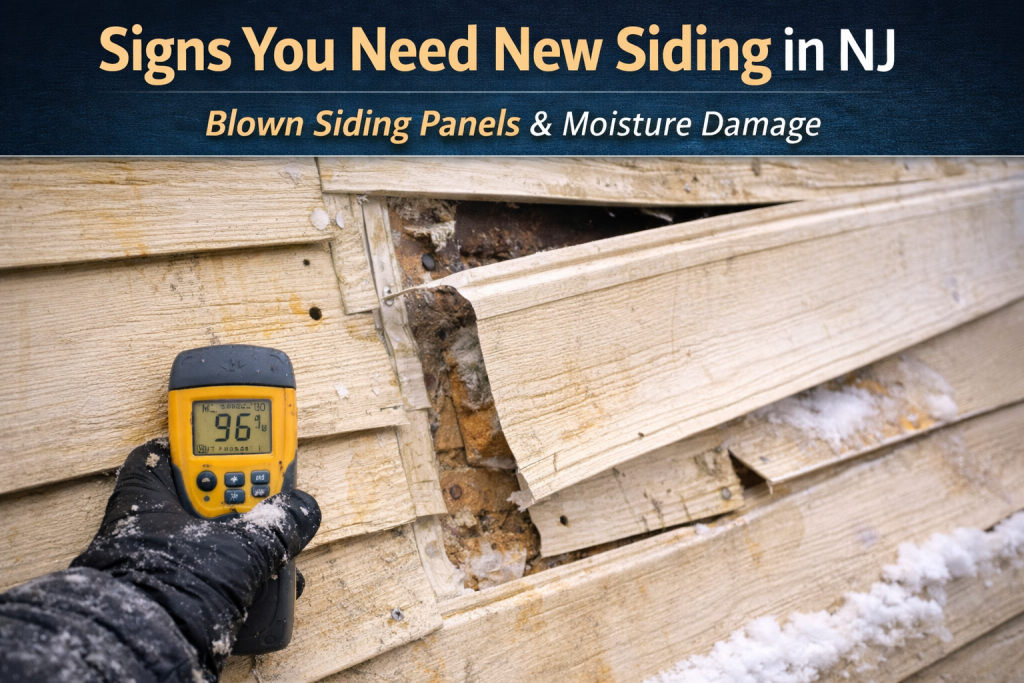
Across Northern NJ, we frequently see:
- Loose siding panels
- Blown siding panels
- Improper flashing siding failures
- Siding moisture problems
- Fading from UV exposure
Nor’easters and winter storms are major contributors.
Siding Inspection in New Jersey – How Contractors Check for Damage
If you’re searching for a siding inspection in NJ, here’s what professionals evaluate.
Siding Inspection Checklist
A proper siding inspection checklist includes:
- Panel alignment
- Fastener inspection
- Flashing condition
- Caulking evaluation
- Moisture readings
How to Check for Rot Behind Siding
To check for rot behind siding, contractors may:
- Use moisture meters
- Perform infrared scans
- Remove a single panel strategically
This process is minimally invasive but critical for detecting hidden damage.
Siding Warranty Coverage in New Jersey – What’s Included?
Many homeowners misunderstand siding warranty coverage.
Vinyl Siding Warranty – What Is Covered
Most vinyl siding warranty policies cover:
- Manufacturer defects
- Product cracking under normal conditions
Does Siding Warranty Cover Water Damage?
Generally, siding warranty coverage does NOT include:
- Water intrusion caused by improper flashing
- Installation errors
- Pre-existing rot
- Ice dam damage
Always confirm labor warranty coverage with your NJ siding contractor.
Frequently Asked Questions About Siding in New Jersey
How do I know if I need new siding in NJ?
Common signs include rot behind siding, loose siding panels, water behind siding, soft spots, and recurring winter siding damage — especially in Bergen, Passaic, and Essex County homes.
There are signs you need new siding in New Jersey. Some signs you need new siding NJ are warped and damaged siding.
Is siding repair or replacement better for NJ homes?
If damage is localized, vinyl siding repair may be sufficient. If moisture has reached the sheathing or multiple elevations are affected, full siding replacement is typically recommended.
Can New Jersey winters cause hidden siding damage?
Yes. Freeze-thaw cycles and ice dam siding damage are leading causes of rot behind siding and sheathing damage behind siding in NJ homes.
How invasive is a siding inspection in New Jersey?
Most siding inspections in NJ are non-invasive and use moisture detection tools. Small panel removal is only done if necessary.
Does siding warranty cover rot in NJ?
Most siding warranty coverage does not include rot caused by improper flashing, water intrusion, or installation errors.
When Should NJ Homeowners Schedule a Siding Inspection?
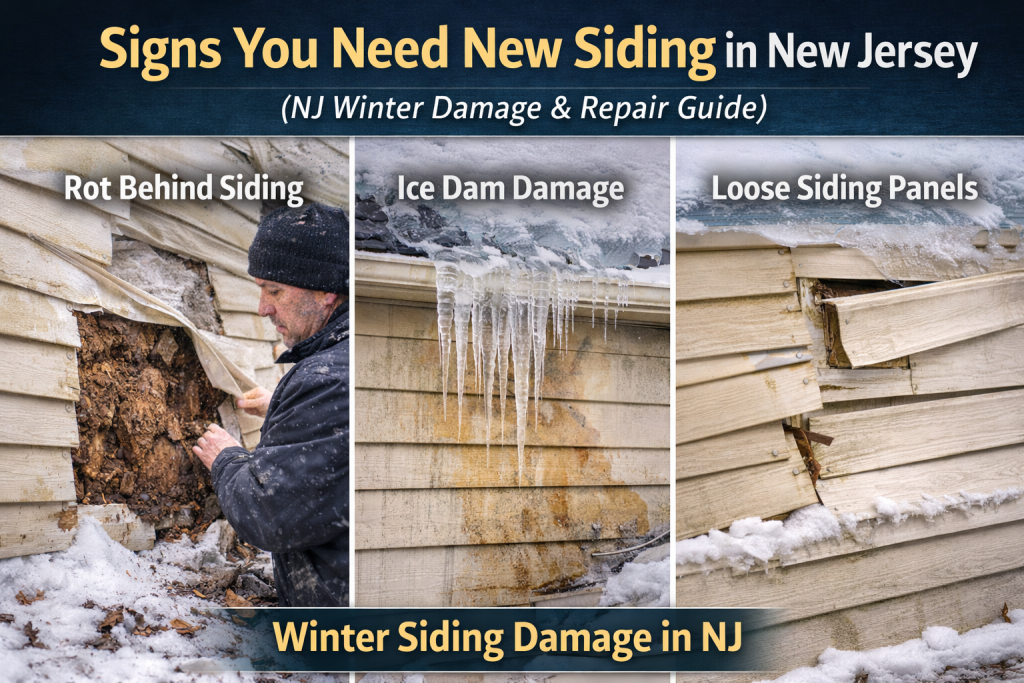
For homeowners in Bergen County, Passaic County, and Essex County, inspections are recommended:
- After winter
- After Nor’easters
- If siding is 15+ years old
- Before listing a home for sale
Early detection prevents expensive structural repairs.
Final Thoughts for New Jersey Homeowners
If you’re noticing:
- Rot behind siding
- Water behind siding
- Loose or blown siding panels
- Persistent winter siding damage
It’s time to schedule a professional siding inspection in New Jersey.
Addressing problems early can prevent major structural repairs and protect your home’s long-term value.
If you’re considering a siding replacement project, a professional evaluation can help determine the most effective solution for your home. Garden State Home Exteriors works with homeowners throughout Bergen, Passaic and Essex Counties to assess siding performance and recommend long-term options.
Give us a call today for a free estimate! We also have availability throughout the afternoon and weekends to work with your schedule. Get in touch today for more information. Follow us on Instagram to see our latest projects.
Written and reviewed by the siding professionals at Garden State Home Exteriors, a New Jersey exterior contractor specializing in siding installation and replacement.